



When the water breaks before the onset of labor this is called premature rupture of membranes (PROM). PROM occurs in 8-10% of term (37 weeks+) pregnancies. Of those, 90% will begin labor within 48 hours. Unless you or your baby is in some kind of danger or you are showing signs of infection, there is no reason to speed up this process. Many mainstream pregnancy books and most OB’s will tell you to go straight to the hospital and what we see in movies confirms that but you actually increase your risk of infection by doing that because the first thing that happens when you arrive is usually a vaginal exam.
Interestingly enough, the recommendations are to avoid digital (finger) vaginal exams but anyone who has had a hospital birth knows that this is the first thing that happens upon admission.
Vaginal exams push bacteria up past the cervix. Fluids in the vagina flow downstream and the only way they will back track is if they are pushed back. In a hospital setting it is not uncommon to have a vaginal check hourly or even more frequently and by several different people. Every time a vaginal exam is performed the infection risk is increased. It simply is not a beneficial procedure contrary to popular belief in our society. Even with clean hands and sterile gloves, bacteria on the external of the vagina are introduced internally. This is especially an issue for GBS+ women. When it really comes down to it, vaginal exams tell us nothing because dilation and effacement of the cervix really are not a good indicator of when a baby will be born. I had a client who has two centimeters and 50% effaced the morning of 40 weeks and 5 days. She was not in labor that morning. She had her baby that night. Labor can progress quickly and examining the cervix is a rough estimate at best.
Another problem with going straight to the hospital when the water breaks is that hospital policy often puts time limits on the labor. Because of the increased risk of infection due to multiple vaginal exams, many hospitals will either being speeding up labor immediately with pitocin. Some hospitals will give the mom 12 hours for labor to spontaneously begin and a few will give the mom 24 hours. Some doctors even begin the c section scare tactics immediately. The problem with this is that creates performance pressure and if the mom is unable to relax, often times labor will not begin or it will stall. Once these interventions begin, the risk of infection increases and the risk of c section increases dramatically.
There is also the myth of ‘dry birth’ that is simply not true because the body continues to make amniotic fluid which in turn will continue to leak but by no means leaves the amniotic sac and baby dry. Because of this ‘dry birth’ myth, women are often times told that they must lay in bed and not move around so that fluid doesn’t continue to leak out. This is counterproductive as gravity is necessary to help the baby rotate and move into the pelvis and movement helps facilitate labor.
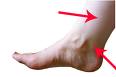
So, what do you do if your water breaks and you are not having contractions? First, check the color. If it is clear it is normal. If it is yellowish to dark brown or green, it could be meconium and you may want to call your care provider. Otherwise, wait. Like I said previously, 90% will begin labor in 48 hours. Don’t put anything into the vagina, don’t check your own cervix, don’t have sex. Try to stimulate labor. There are many things you can do to help the process along. Take a walk. Cuddle with your partner as getting touchy feely releases oxytocin, the hormone responsible for causing contractions. This is also the reason that nipple stimulation works. Nipple stimulation triggers oxytocin.Also, the use of acupressure can trigger labor. There are two pressure points on the body that help stimulate contractions.

When Research is Flawed:
Should Labor Be Induced Immediately
with Term Prelabor Rupture of Membranes?
by Henci Goer
Commentary on: Hannah, M. E., Ohlsson, A., Farine, D., Hewson, S. A., Hodnett, E. D., Myhr, T. L., et al. (1996). Induction of labor compared with expectant management for prelabor rupture of the membranes at term. TermPROM study group. N Engl J Med, 334(16), 1005-1010. [Abstract]
Study design and results: multicenter, multinational randomized controlled trial in developed countries of 5041 women with confirmed PROM at ≥ 37 completed weeks of gestation. Women were not in active labor, had a singleton fetus in cephalic presentation, and had no contraindication to trial participation.
Investigators randomly allocated trial participants to one of four groups: (1) immediate induction with oxytocin, (2) expectant management for 4 days before oxytocin induction or until an indication for induction developed, (3) immediate induction with prostaglandin E2 (PGE2) followed by oxytocin if necessary, or (4) expectant management for 4 days before PGE2 induction or until an indication for induction developed.
Problems include but are not limited to the following:
- Selected background information [Note: These represent ranges in rates reported among the 4 study groups. No significant differences across groups were detected for any of the following:]
- vaginal exam at trial admission: 35-39% digital, 64-67% speculum
- number of digital vaginal exams: 49-63% had ≥ 4
- Group B strep (GBS) status: 9-12% tested positive for GBS
- median time to active labor in expectant groups: 16-17 h
- Selected maternal outcomes:
- cesarean rate: rates ranged among the 4 groups from 10-11% overall, 14-15% nulliparous women, 4-5% multiparous women
- any sign of chorioamnionitis:
- 4.0% induction/oxytocin vs. 8.6 % expectant/oxytocin, p < 0.001 [Absolute difference: 4.6%. Absolute difference for diagnosis based on criteria other than intrapartum fever (fever before labor, elevated white blood cell count, or foul-smelling amniotic fluid): 2.3%.]
- 6.2% induction/prostaglandin vs. 7.8% expectant/prostaglandin. Difference did not achieve statistical significance, meaning it was likely to be due to chance.
- Neonatal outcomes:
- neonatal infection: rates ranged from 2-3% and were not significantly different across the 4 groups
- stay in neonatal intensive care unit > 24 h:
- 7% induction/oxytocin vs. 12% expectant/oxytocin, p < 0.001.
- 9% induction/prostaglandin vs. 10% expectant/prostaglandin. Difference did not achieve statistical significance
- antibiotics:
- 8% induction/oxytocin vs. 14% expectant/oxytocin, p < 0.001.
- 11% induction/prostaglandin vs. 12% expectant/prostaglandin, p = 0.003.
- All other neonatal outcomes were similar, including, fetal distress, meconium-stained amniotic fluid, Apgar score < 7 at 1 or 5 min, cord blood pH < 7.1, need for oxygen resuscitation, jitteriness or irritability, seizures, hypotonia, abnormal level of consciousness, apnea, abnormal feeding at 48 h or more, and ventilation after resuscitation.
Comment: Based solely on the TermPROM trial, the American College of Obstetricians and Gynecologists (ACOG) recommends immediate induction, generally with oxytocin, for women with term PROM on the grounds that inducing labor will reduce chorioamnionitis, febrile morbidity, and neonatal antibiotic treatments without increasing cesarean rates (ACOG, 2007). The primary argument for immediate induction has always been reducing neonatal infections, which ACOG acknowledges it does not do, and, as can be seen in this deconstruction, with optimal care other benefits are likely to be smaller than currently appear.
- Failure to consider the effect of epidural analgesia on intrapartum fever confounds chorioamnionitis results. Most diagnoses of chorioamnionitis were made on the basis of intrapartum fever. At the time of the trial, the association between epidural analgesia and intrapartum fever was not widely known, and no adjustment was made for this factor. Had this been done, an excess probably would remain in the expectant group, but infection rates might have been lower in all groups.
- Women who were colonized with GBS were not treated in labor. A secondary analysis looked at the effect of GBS status, based on vaginal swabs obtained at trial entry, on outcomes (Hannah, 1997). Calculations using that study’s data reveal that one-third of neonatal infections were in women testing positive for GBS. GBS also caused one of the four deaths in the expectant group in babies without lethal anomalies. Current standard practice—screening for GBS at the end of pregnancy and providing antibiotics in labor to those who are colonized—would have reduced, and might have eliminated neonatal infections in GBS + women, thus reducing infection rates overall, and it might have prevented the death. It is also possible that GBS status would not have been a factor or would have been less of a factor in neonatal infections were it not for women having vaginal exams at trial entry and multiple exams before delivery. (See next bullet points.)
- Chorioamnionitis rates and possibly neonatal infection rates were confounded by multiple digital vaginal exams. Leaving aside epidural analgesia as a confounding factor in diagnosing chorioamnionitis, yet another secondary analysis reported that chorioamnionitis increased steadily with number of digital vaginal exams independent of other factors (Seaward, 1997). Compared with less than three, the odds ratio climbed from a 2-fold increase for 3 to 4 exams to a 5-fold increase with more than 8. Seaward (1998) reported in their evaluation of risk factors for neonatal infection that chorioamnionitis had the strongest independent association. The rate among infants of women with chorioamnionitis was 16%, a six-fold increase over those not experiencing chorioamnionitis.
- Neonatal infection rates were confounded by vaginal exams at trial entry. A secondary analysis of trial data found that having a vaginal exam at trial entry increased the risk of neonatal infection by 250%, even after taking into account GBS status (Hannah, 1997). This difference is likely to be greater than appears because the analysis authors chose to combine digital and speculum exams, although only digital exams are believed to increase the risk of infection.
- Neonatal infection rates were confounded by multiple digital vaginal exams during labor. According to another secondary analysis, the percentage of infections trended upward with the number of vaginal exams independent of other factors, including time from rupture of membranes to labor onset and length of active labor (Seaward, 1998). It rose from 2% in women with 3 to 4 exams to 5% in women with more than 8. The odds roughly doubled compared with women having fewer than 3 vaginal exams, although the difference only achieved statistical significance when 7 to 8 exams were compared with fewer than 3.
By contrast, a Cochrane systematic review published in 2006 also evaluates term PROM management (Dare, 2006). Despite being heavily dependent on the TermPROM trial—three-quarters of the 6800 participants among the 12 trials in total come from the TermPROM trial—the reviewers reach a more tempered conclusion: “Since differences in outcomes between planned and expectant management may not be substantial, women need to be able to access the appropriate information to make an informed choice (p. 12).”
In summary, in the absence of signs of infection, expectant management remains a viable option. Nonetheless, the secondary analyses have given us a more nuanced picture. While the original trial report found no difference in neonatal infection rates between immediate induction and expectant management overall, the secondary analyses make clear that length of time between rupture and delivery matters. They also found that modifiable factors affected infection rates, which means we do not know what they would have been with optimal care.
For those choosing expectant management, the question arises of how long to wait before inducing labor if one prefers to set a limit. Consider the following: Seaward (1998) reported that time from membrane rupture to labor onset of 24-48 hours versus less than 12 hours was an independent predictor of neonatal infection. Infection rates with 24 hours or more to onset of labor were 4% versus the background 2% rate. Hannah (1996) reported that the median time to active labor, not labor onset, after membrane rupture was 16-17 hours. It therefore seems reasonable to wait about 18 hours before inducing labor. Half the group of women will have achieved active labor by this time, and, if induced, the remaining half are likely to have started labor by the 24-hour cut point.
Women with PROM at term who are GBS + constitute a special subset. The Centers for Disease Control (2002) guidelines for management of GBS + women say nothing about inducing women with ruptured membranes at term, which suggests that awaiting spontaneous labor is acceptable provided that antibiotic therapy is initiated. And given that it takes time to instill the recommended dose of antibiotics, common sense dictates that women who prefer not to wait for labor should delay induction until they have an adequate dose of antibiotics on board.
In any case, regardless of GBS status or decisions around whether or when to induce, to minimize the risk of infection, women should avoid digital vaginal exams until established in labor, and their use should be minimized during labor. Data also suggest that oxytocin is the induction agent of choice. It appears to reduce infection rates compared with PGE2 without any offsetting disadvantages.
References:
ACOG. (2007). Premature rupture of membranes. Practice Bulletin No. 80.
Centers for Disease Control and Prevention. (2002) Prevention of perinatal group B streptococcal disease. MMWR;51(No.RR-11).
Dare, M. R., Middleton, P., Crowther, C. A., Flenady, V. J., & Varatharaju, B. (2006). Planned early birth versus expectant management (waiting) for prelabour rupture of membranes at term (37 weeks or more). Cochrane Database Syst Rev(1), CD005302.
Hannah, M. E., Ohlsson, A., Farine, D., Hewson, S. A., Hodnett, E. D., Myhr, T. L., et al. (1996). Induction of labor compared with expectant management for prelabor rupture of the membranes at term. TermPROM study group. N Engl J Med, 334(16), 1005-1010.
Hannah, M. E., Ohlsson, A., Wang, E. E., Matlow, A., Foster, G. A., Willan, A. R., et al. (1997). Maternal colonization with group b streptococcus and prelabor rupture of membranes at term: The role of induction of labor. TermPROM study group. Am J Obstet Gynecol, 177(4), 780-785.
Seaward, P. G., Hannah, M. E., Myhr, T. L., Farine, D., Ohlsson, A., Wang, E. E., et al. (1997). International multicentre term prelabor rupture of membranes study: Evaluation of predictors of clinical chorioamnionitis and postpartum fever in patients with prelabor rupture of membranes at term. Am J Obstet Gynecol, 177(5), 1024-1029.
Seaward, P. G., Hannah, M. E., Myhr, T. L., Farine, D., Ohlsson, A., Wang, E. E., et al. (1998). International multicenter term prom study: Evaluation of predictors of neonatal infection in infants born to patients with premature rupture of membranes at term. Premature rupture of the membranes. Am J Obstet Gynecol, 179(3 Pt 1), 635-639.