


Widgets


facebook twitter weibo
Register Logout Forget Password

懷孕,每一位女性最期待、最渴盼的幸福時光,擁有一生中最驕傲、最美麗的曲線。 當獲知自己體內有一個小生命開始孕育的那個時刻起,一種由衷而生的激情,一種莊嚴神聖的感覺便會湧上心頭。從此,心頭上有了一份牽掛,生活中有了一種希冀。從此,身體的每一根神經都牽掛于那個在肚子裡慢慢成長的神奇生命。懷孕女人的內心,驚喜和驚愕同在 — 驚喜于一個生命的到來,驚愕于對自己身體的無知。在這美麗動人的 40 周歷程中,相伴准媽媽的不僅是將為人母的喜悅和驕傲,還有很多麻煩和疑慮時時在困擾。怎樣輕鬆、平安、順利地走過孕育小寶貝的生命歷程?這是每一位將為人母者所迫切想知道的。嬌姐伴隨准媽媽從妊娠第一周到最後一周。告訴准媽媽自身的變化、胎兒的生長髮育、准媽媽的日常飲食營養以及在生活中應該注意的事項,全方位細心呵護准媽媽和寶寶一起成長的每一天,伴隨准媽媽和寶寶在妊娠中的每一分鐘。 嬌姐將告訴准媽媽在孕期中不知道的、想知道的、應該知道的一切,打消您在孕育過程中的全部顧慮,使您輕鬆愉快地度過一段奇妙之旅。相信從懷孕到初為人母的這段經歷必將成為您一生中最美妙的回憶。 不一樣的孕育,不一樣的未來! GITZEL GIULITTE FACEBOOK 專頁,同時會有好多各形各色的資訊從中西醫護到格價 和8卦 0野睇嫁任妳選擇, 你一定唔會覺得悶呢 !.... 如果讀者對嬌姐部落格blog尚算滿意, 懇請大家高抬貴手,幫幫手按 LIKE 同時分享比你嘅朋友; 嬌姐從事陪月多年, 擁有各前僱主的推薦信,推薦信內容同時可為閣下提供愚蒙在性格特徵​​技能上的側寫作為參考,可讓閣下作出評估 ,希望取得共識和合作機會。丞蒙閣下賞識與敝人聯絡面談, 定會是敝人的榮幸 。OUR WEBSITE : http://tiny.cc/gitzelgiu PLEASE HELP AND SHARE GITZEL GIULIETTE 。 唔該晒. 嬌姐支持要求政府維護本港醫療、福利及教育資源 。 祝妳快樂!歲歲平安,安居樂業。業和邦興,興旺發達。大吉大利。遊刃有餘,青春永駐。嬌陪月團隊專線 +852-61596793 ! Start | Stop
懷孕 (91) 孕期 (97) 孕初期 孕中期 (31) 孕晚期 (50) 注意項 (124) 分娩 (13)坐月 (46) 孕期检查 (26) confinement recipes (30) 孕前準備 (62)
寶寶 (50) 寶寶照顧 (81) 育兒百寶箱 (70) 親子 (38) Chinese Medicine (18) ADHD (28) 母乳餵養 (3) 人工受孕 (4)食譜 (237)
TOOLS
fertility tools Track ovulation with our fertility chart Find your fertile days with our ovulation calculator Create a TTC ticker and count down to ovulationDue Date Calculator
Pregnancy Tools Create a personalized pregnancy ticker. Track your contractions with our contraction counter. From poppyseed to papaya, watch baby grow! Pregnancy Weight Gain Tracker
大肚婆完美懷孕[月] BALLPOINT CHECKLIST 準媽媽的40週 [週 ] BALLPOINT CHECKLIST 注意事項 : 懷孕期40周280 天 25 孕期檢查項目 CHECKLIST
胎兒 280天 孕婦必備分娩寶典 新生嬰兒必備用品清單 1 TAKE 孕期營養補充品 CHECKLIST


產前講座課堂
產前概述總覽 初生嬰兒護理及奶瓶餵飼 產前及產後飲食與營養 產前孕婦運動 產後護理、健康、情緒轉變、母乳哺飼及月子

Loading


顯示具有 自閉症 標籤的文章。 顯示所有文章

2012年3月13日 星期二

No-Yeast Required Cinnamon Rolls


 a recipe from In Jennie’s Kitchen – dense, gooey, mouth-watering no-yeast required cinnamon rolls!
DSC_0083
OH.MA.GAH. I am dying over this recipe! See, I’ve baked with yeast several times in the past year, and the recipes have turned out well, more or less, but sometimes I just don’t have the time or patience to deal with it, ya’ know?
DSC_0095
Homemade cinnamon rolls without the hassle of making sure the milk’s the right temperature? The yeast is activating? The dough has doubled in size?
DSC_0079
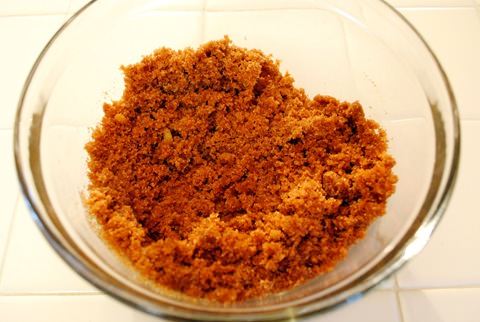
They exists, my friends. They exist! And here’s how you make ‘em: Start by combining the cinnamon roll filling ingredients: brown sugar, granulated sugar, cinnamon, salt & butter.
DSC_0001 DSC_0003
DSC_0004 DSC_0006
Mix it up.
DSC_0008
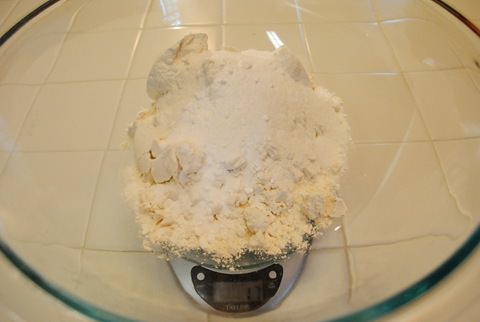
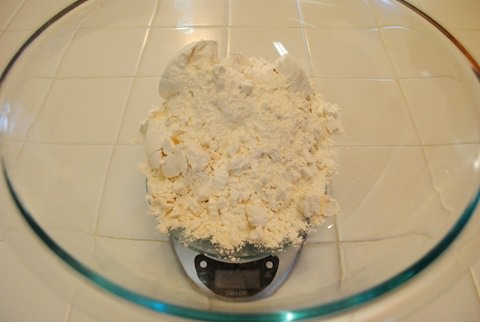
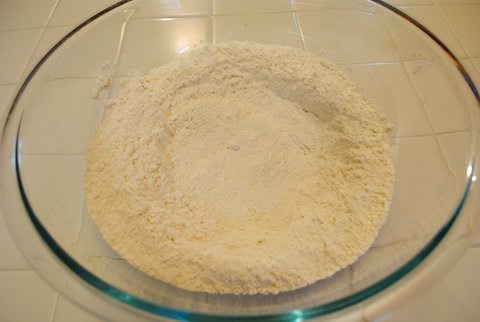
In a separate, larger bowl, combine flour, more sugar & salt, plus the leavening agents that let us ditch that pesky yeast.
DSC_0009 DSC_0013
Baking powder and baking soda. Booyah.
DSC_0014
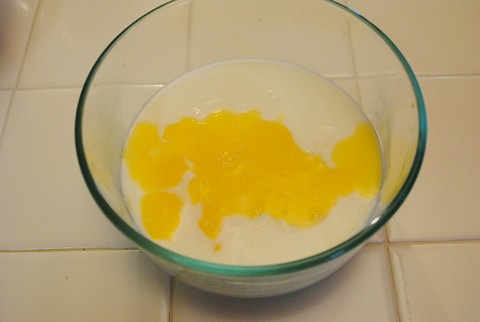
Whisk together more butter with buttermilk, then pour the mixture into the dry ingredients.
DSC_0015 DSC_0016
Stir with a stiff spoon or spatula juuuuuust until the dough comes together. If you over-mix, you will have hard cinnamon rolls. Then, to quote Dave & Sarah, everyone will laugh at you. And we can’t have that.
DSC_0017
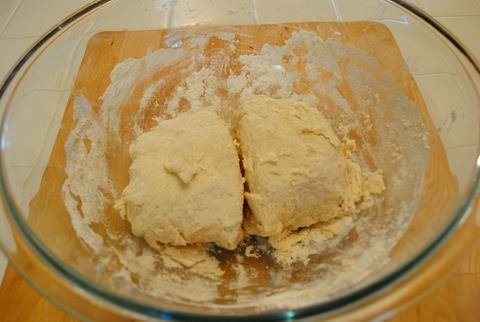
Gently kneed the dough into a ball, then divide into two halves.
DSC_0020
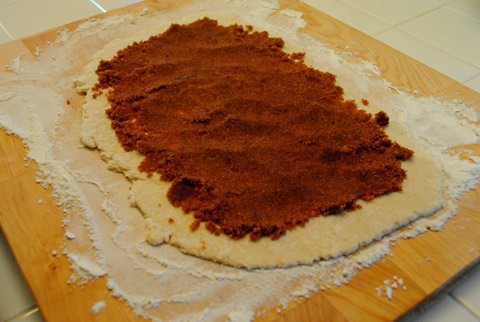
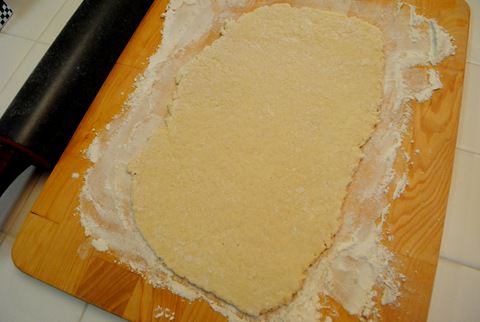
Turn each half onto a flat, floured surface, then press on half the filling mixture.
DSC_0022 DSC_0024
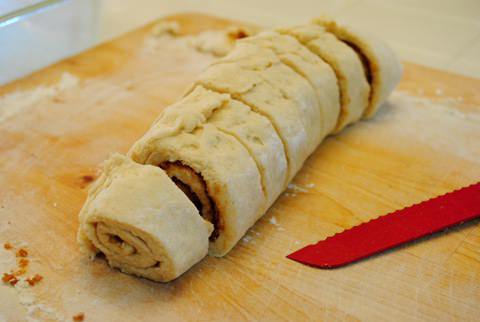
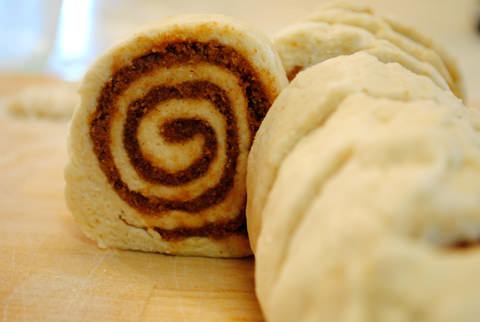
Roll the dough up like a log, then pinch the top seam shut. This is the part where I noticed the biggest difference between a yeast-required vs. non-yeast-required cinnamon roll dough. This dough is MUCH easier to handle. Not as sticky, and more firm.
DSC_0026 DSC_0029
Slice, slice, baby!
DSC_0031
Oh yeah!
DSC_0032
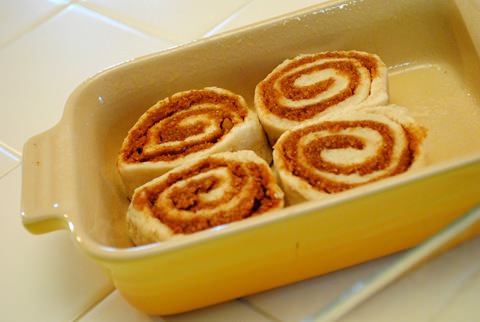
The recipe says to place the cinnamon rolls into a greased 11×8″ pan. I seemed to have misplaced mine sometime in the last month, so I spit the rolls between 8×8″ and 6×4″ pans. MAKE SURE YOU GREASE THEM FIRST! If you don’t, you’ll be sorry! Now pop those puppies in a piping hot oven.
DSC_0045 DSC_0047
In the quick 15 minutes they take to bake, whip up some cream cheese icing.
DSC_0051 DSC_0053
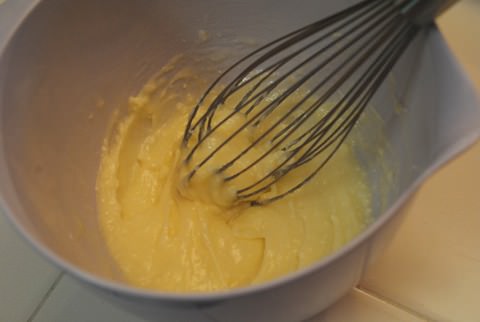
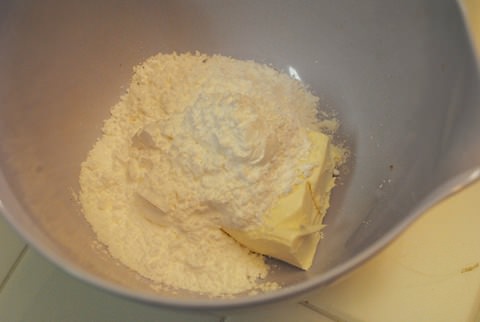
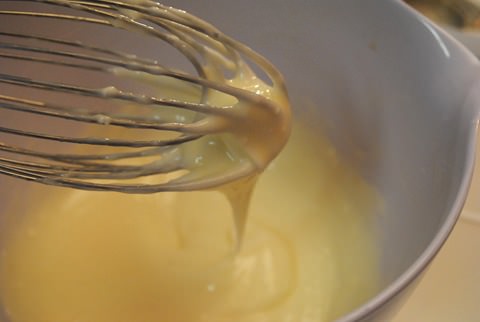
Mash together powdered sugar and cream cheese with a fork, then drizzle in buttermilk and whisk until smooth.
DSC_0055
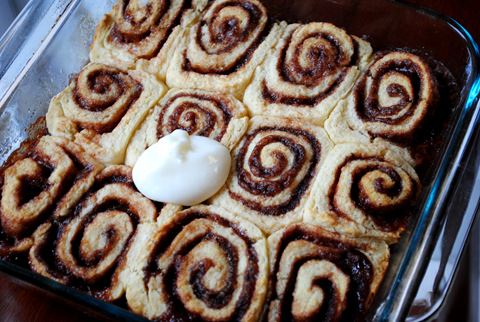
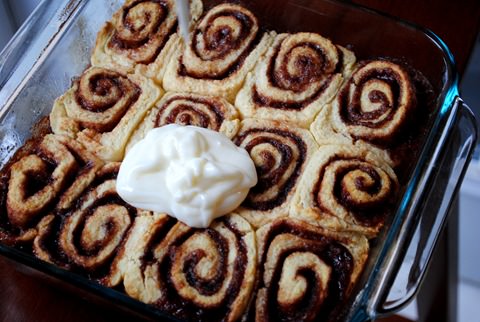
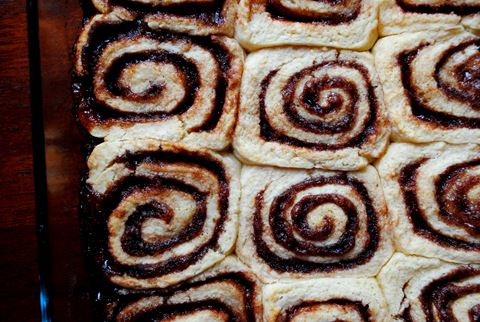
Next take those GORGEOUS, bubbly, golden-brown rolls out of the oven, (ahhh!)
DSC_0065
and pretend you live in a world where Grandmas still place hot pies on their windowsills to cool. Place yours on a wooden stool in front of the open back-porch door instead…
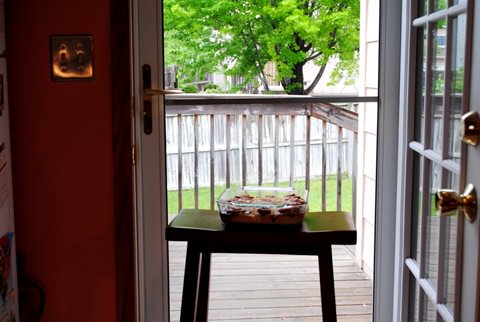
DSC_0058
Then breeeeeathe in the Heavenly, sweet aroma that’s swirling around your kitchen.
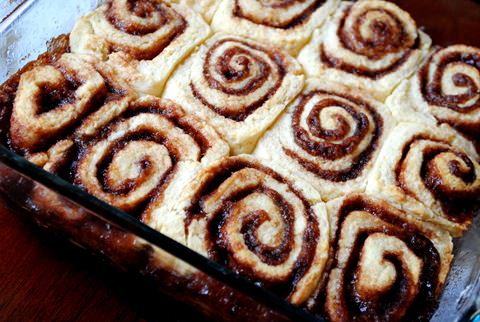
DSC_0066
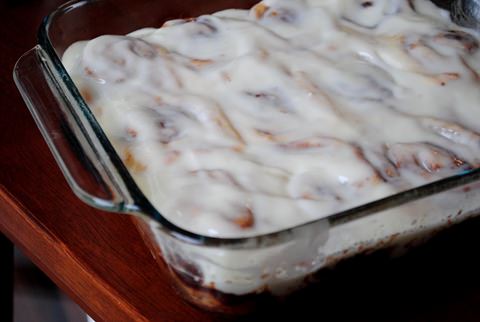
Now ice, ice,
DSC_0068 DSC_0070
BABY!
DSC_0074

Cinnamon Rolls – No Yeast Required!


Print this recipe!
Makes 16 rolls.
From In Jennie’s Kitchen.


Ingredients:
Filling:
3/4 cup packed brown sugar
1/2 cup granulated sugar
1 Tablespoon cinnamon
1/2 teaspoon salt
2 Tablespoons butter, melted
Dough:
2 1/2 cups all purpose flour, plus more for rolling out dough
1/4 cup granulated sugar
1 1/2 teaspoons baking powder
1/2 teaspoon baking soda
1/2 teaspoon salt
1 cup buttermilk
5 Tablespoons butter, melted and divided
Icing:
3oz cream cheese, softened
4 Tablespoons buttermilk
1 cup powdered sugar

Directions: 

1. Preheat oven to 425. Combine filling ingredients in a small bowl, then mix with a fork until well blended.

2. In a another, larger bowl, combine flour, sugar, baking powder, baking soda and salt. Whisk together buttermilk and 4 Tablespoons melted butter in a separate bowl, then pour into the middle of the dry ingredients. Stir together until dough just comes together (do not overmix.) Kneed slightly with your hands until the dough forms into a ball, then slice it in half.

3. On a lightly floured surface, roll each half into a 12×8″ rectangle (think slightly longer than a sheet of paper.) Press half the filling mixture into the center, leaving 1/4″ of the dough clear on all 4 sides, then roll like a sausage. Pinch together seam, trim ends and cut into 8 slices. Repeat with the other dough half, then place rolls in a non-stick sprayed 11×8″ pan, or an 8×8 and 6×4″ pan. Brush cinnamon rolls with remaining Tablespoon of melted butter and bake for 15 minutes, or until tops are golden brown.

4. Meanwhile, to make the icing, mash together softened cream cheese and powdered sugar with a fork until smooth. Whisk in buttermilk, 1 Tablespoon at a time, until creamy. Drizzle onto hot cinnamon rolls and spread evenly.

DSC_0076
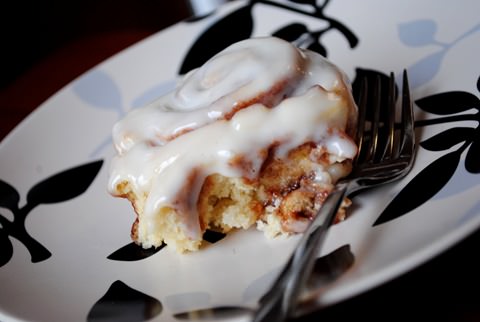
I can’t remember the last time I was this excited about a recipe! I just can’t get over how much easier these were than cinnamon rolls made with yeast-required dough. So rich and scrumptious too!
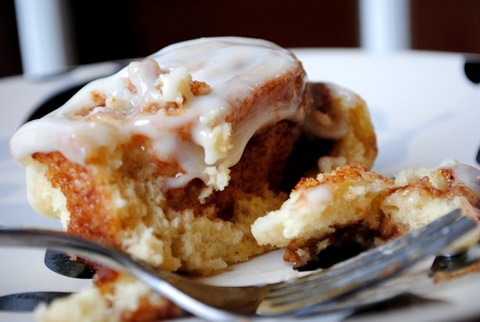
DSC_0093
Here are the differences between yeast-required & no-yeast-required cinnamon rolls, in my experience/opinion:
  • No-yeast dough is much more firm and cooperative than sticky, yeast-required dough – which makes it much easier to handle, roll out and cut.
  • The texture of a baked no-yeast roll is more dense than a yeast-required roll. Not better or worse, just different. Allllmost like a heavy pancake?!
  • I saved HOURS in the kitchen by ditching the yeast!
DSC_0082
Ok, ok – bakers – please don’t get angry with me. There is definitely something to be said about baking with yeast. It’s very rewarding, and I’m not giving it up for good (I still need to try and make homemade bread!) it’s just that – if you don’t have a machine or anything, it takes time.
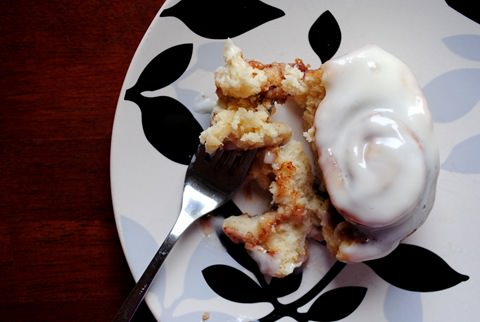
DSC_0089
So if you get a craving for warm, fresh cinnamon rolls that needs to be squashed NOW, then you need to make these!

DSC_0088
Want to know what goes really well with a warm cinnamon roll? Coffee. :)
DSC_0015
Right now through June 1st, you can get anything at Green Mountain Coffee for 15% off, shipped free, by using code: AM0013-3592 at checkout. They make TONS of K-cup varieties, and sell regular coffee too.
DSC_0010
Right now I’m obsessed with Gloria Jean’s Hazelnut coffee. It’s the best K-cup flavor I’ve tried yet – even better than Chocolate Donut! And that’s sayin’ something…
DSC_0008


What Is Yeast Overgrowth?


The healthy gut contains both yeast and good bacteria, in balance with each other. In many Autism Spectrum Disorder (ASD) kids, however, one or the other can be out of balance. Bacteria can overgrow, or there can be a complete lack of bacteria. Also, bad bacteria can develop and take over, rather than good bacteria, causing major problems for our children.
Bacteria live in the intestinal tract, sharing space with the yeast. Antibiotic use makes yeast worse, or can start off an unhealthy reaction causing yeast overgrowth. Antibiotics kill bacteria, both good and bad, but not yeast. When using antibiotics, the bad bacteria can take over the system and yeast can grow to fill in the space left by the removal of the bacteria.
There are many strains of yeast that live in the digestive tract including candida, which appears to be the most common. There are also several different types of “bad” bacteria, including clostridia and Citrabacter F.
Both good and bad bacteria exist in the gut. Common “good” bacteria, also called beneficial bacteria, are lactobacillus acidophilus and bifidobacterium,  And don’t panic if you see it on your test but bacteria like e-coli exist in the normal gut.
Overgrowth is made possible by a dysfunctional immune system or gastrointestinal distress. A healthy immune system and regular, healthy bowel movements should keep the Candida in check. Occasionally, these complex systems “get out of check” and overgrowth of bad bugs becomes an issue.
What is important to remember: Yeast live and feed on sugar. Limiting high sugar (or foods that turn into sugar in the gut) is the first and most important step.

What Does Yeast Overgrowth Look Like?

Yeast overgrowth manifests itself in two forms – behavior and physical.

Behavioral signs

  • Headaches
  • Inappropriate laughter
  • Sleep disturbances
  • Unexplained intermittent crying episodes
  • Belly aches
  • Constipation
  • Bed wetting
  • Gas pains
  • Fatigue
  • Depression
  • “Foggyness”
  • Inattention
  • Hyperactivity
  • Anger, aggression
  • Increased self-stimulatory behavior
  • High-pitched squealing
  • Increased sensory defensiveness
  • Climbing/jumping off things
  • Sugar cravings
  • Confusion
  • Lethargy

Physical Signs

  • in the mouth, in the form of thrush
  • on the skin such as diaper rash or eczema
  • red ring around the anus
  • rash or cracking between the toes or joints

How Do You Test For Yeast?

According to best practices, yeast levels are best measured via a stool (poop) test.
Genova Diagnostics offers a stool test called the CDSA (Comprehensive Digestive Stool Analysis)
A test such as the CDSA tells you how much yeast, what types and amounts of yeast and (both good and bad) bacteria your child has and offers you information about which pharmaceutical and homeopathic treatments might be the most effective to treat your child’s issues.
Other labs that offer a stool analysis include Doctor’s Data and Metametrix.
Urinary Organic Acid Tests (OAT) may measure levels of “fungal metabolites” (yeast waste products) in the urine. Several labs offer this test including:

How Do You Treat Yeast?

There are three main ways to treat yeast overgrowth – medications, homeopathic treatments and dietary changes.

Medications (prescribed) include:

  • Nystatin
  • Ketoconosal
  • Sporonox
  • Amphoterican B
  • Flagyl (Metronidazole)
  • Nystatin
  • Diflucan (fluconazole)
  • Bactrim
  • Vancomycin
  • Neomycin
  • Lamisil
  • Nizoral
  • Vermox (kills what feeds on sugar)

Homeopathic treatments include:

  • Probiotics
  • HBOT (anecdotally)
  • Colostrum
  • ThreeLac
  • Grapefruit Seed Extract (GSE)
  • Olive leaf extract
  • Oil of oregano
  • Garlic extract
  • Pau d’Arco
  • Uva ursi
  • Biotin
  • Sugar-eating enzymes like CarbDigest or No-Fenol
  • Caprylic acid
  • Berberine
  • MCT (Medium Chain Triglycerides) oil
Note: Dosing and frequency are recommended based on the individual’s age and weight. Your doctor will prescribe the treatment according to your child’s unique needs. Yeast treatments can require several treatments or reoccurring treatments to remedy the imbalance. Rarely is one yeast treatment the only requirement for keeping bacteria in balance. Dietary intervention controlling sugar intake is also a crucial step in this process.

Dietary changes include:

What Is a No/Low Yeast Diet?

Yeast lives and feeds on sugar so a low/no-yeast diet would be one that limited or removed sugars, and foods that break down into simple sugars such as corn, rice, fruit. Removing juices (which are high in sugars), removing candy and all sugars is the first step. Read here for a list of sugar and carbohydrate foods that feed yeast.

What Should I Expect To See When Treating Yeast?

Die-off (rapid dying of gut bugs, leading to excess release of toxins) of massive quantities of yeast and bacteria can be physically hard on the body. That much dead or dying stuff flying around can wreak havoc so it’s common that we see a negative reaction, before a good reaction when starting yeast treatment. This is also called a “Herkshimer” reaction, a massive die off of pathogens. There are ways to help combat this reaction and bring your child through the process with the least bad reaction.

Things that can help lessen the negative reaction:

  • Activated Charcoal capsules
  • Alka Seltzer Gold (not regular)
  • Drinking lots of water (8 oz every 2 hours minimum)
  • High doses of Vitamin C or magnesium to get them to stool the toxins out faster
Typically, the die off following initial treatments can be disconcerting. Witnessing a die off reaction in the first week is typically a sign that the treatment is starting to work.  Stopping the treatment regimen prior to its completion is not recommended as it can aggravate and make the condition worse. Consult your doctor for details and to address any concerns. Not every individual on a yeast treatment protocol experience “die off” or a negative reaction.
After the typical “die off” is over, usually lasting 3-7 days, most parents report that treatment improves their children’s behavior and concentration –– kids seem more aware and less “foggy.” Anecdotal reports claim that the frequency of inappropriate noises, teeth grinding, biting, hitting, hyperactivity, and aggressive behavior decreases. The child acts less silly and shows less inappropriate laughter, just to name a few.

Does Yeast Ever Stop Being a Problem?

Parents often have to fight yeast over and over. Here are some reasons that it returns in our children.
  • Certain treatments that we use for other issues in autism, like chelation for removal of heavy metals, or anti-virals to reduce extremely high viral markers can also exacerbate yeast.
  • A common mistake parents make when starting the GFCF diet is to substitute a lot of high-sugar, high carbohydrate foods for the gluten and casein thus causing more yeast.
  • Weak immune system – since yeast overgrowth wouldn’t be possible with a healthy immune system, it’s very important to get the immune system stabilized. Leaving the immune system weak can bring back yeast in a hurry.
  • Side effect of a prescribed supplement or a drug.
  • Toxic metals, such as mercury and chemicals, such as aspartame, MSG and others can kill friendly intestinal flora, alter immune response and allow yeast to proliferate.
  • Disorders like hormonal imbalance, celiac disease or hemochromatosis.
  • Reports back from parents indicate that as the child’s overall health improves, yeast and other bacteria imbalances become less of an issue. This process takes time and a dedicated doctor to monitor and assist in this process.

Tips For Keeping Yeast At Bay

  • Probiotics – Rotating probiotics every 3 months to include different strains.
  • Diet – makes sure your child is not getting too much sugar or too many carbs in their diet. Limit juice consumption.
  • Enzymes – Use sugar-eating enzymes.
  • Immune boosters – products like colostrum, zinc, Vitamin C, cranberry extract, Grapefruit seed extract, and others will boost the immune system.
  • Vermox – using this starves sugar-eating organisms, the standard is one pill every 10 days.
  • Gut cleanouts – To “wipe the slate clean” every 6-12 months can be a good thing. This is a standard pediatric gut clean out protocol that has worked for us for many years:
    • Bottle of magnesium citrate (any drug or grocery store)
    • Fleet enema
    • Lots of water
    • Dulcolax: Give first according to package directions, and start hydrating with water. The next day, do enema, then give the magnesium citrate. Keep your child hydrated with water.

Suggested Additional Reading on Yeast Overgrowth:

www.autism.com/triggers/candida_org.htm
www.nutritioninstitute.com/Autism.html
www.greatplainslaboratory.com/home/eng/yeast.asp

Related Links:

Dietary intervention (including GFCF, SCD)
Gluten-free, casein-free diet
SCD (Specific Carbohydrate Diet)


The No Yeast, No Sugar Diet, with Pau d'Arco Read more at Suite101: The No Yeast, No Sugar Diet, with Pau d'Arco


Pau d' Arco Bark - Teresa Knudsen
Pau d' Arco Bark 
People on a diet can have trouble losing weight. One option is no yeast and sugar, but add pau d'arco. It may help other ills: headache, depression, autism,and cancer.
The no yeast-no sugar diet addresses the build-up of yeast in the human body. The build-up is considered to be at the root of many ailments, including headache, depression, autism, and diseases such as cancer. Adding processed sugar to the body helps the yeast grow. Thus, to rid the body of yeast, the dieter avoids products with processed sugar and yeast.

Pau d'Arco

The inner bark of the taheebo tree is found in the Amazon rain forest. A tea or tincture can help remove yeast.

Water

With general guidelines of 8 glasses of water a day, water helps with detoxing.


Examples of food to avoid

  • Anything with sugar or sugar-substitute and/or yeast.
  • Fried foods
  • Meat with hormones, antibiotics, and other additives
  • Processed meats, such as bologna, sausage, hot dogs
  • All forms of bread that have yeast and sugar as ingredients.
  • Pasta, crackers, cookies, candy, ice cream, etc.

Examples of liquids to avoid:

  • Anything with sugar or sugar-substitute and/or yeast.
  • Sodas, pop, sugared fruit juices.
  • Black Tea
  • Coffee
  • Beer
  • Wine
  • Spirits: At first, some practitioners allow moderate consumption of certain spirits, including rum, vodka, bourbon. Eventually, all spirits are avoided.

What Can People Eat?

  • Meat: without hormones or other additives.
  • Beef
  • Chicken, eggs
  • Pork
  • Seafood
  • Fresh vegetables
  • Nuts such as walnuts, almonds, pecans
  • Brown rice
  • Potatoes and yams

Fruit

Fresh fruit is avoided for the first week or so, as the sugar can keep the yeast alive. However, benefits of fresh fruit, especially raspberries, blackberries, and blueberries, return these fruits to the diet within a week or two. Avoid grapes and bruised fruit.

Dairy Products

These include milk, sour cream, cottage cheese, hard cheeses, and ice cream. Soy milk can replace regular milk, but soy is not advised for children.

What about Junk Food?

Some "junk" food can be eaten in moderation, including plain popcorn and plain potato chips

Yeast Die-Off Symptoms

Many people report a week or two of unpleasant symptoms when the yeast begins to die and exit the body.

Linda Arndt notes in her article "Yeast Infection Humans Candida", "Detox symptoms can be gas, bloating, nausea, itchy skin, sweats, any flu like symptoms, if you feel these, one or any, it will give you an indication of how much toxins in your body that needed to be cleansed. "

Peppermint Tea and Chamomile Teas Help with Yeast Die-Off Symptoms

People report some immediate relief by drinking water and/or brewing peppermint or chamomile tea. These teas can help digestion and provide headache relief.

What about Cheating on this diet?

Almost everyone will cheat on a diet. On the no-yeast, no-sugar diet, dieters report immediately feeling the negative results of cheating. There are reports of upset stomachs or an overall feeling "bad." These effects can be modified by avoiding the yeast and sugar, and by drinking peppermint or chamomile tea, or using natural analgesics.

Specific Ailments for the No Yeast-No Sugar diet

There are claims that the no-yeast, no-sugar diet can benefit people with candida yeast infections, or children with autism or help with a variety of physical and mental ills. Reports include feeling better, and lessening depression. There are claims for help with cancer and other diseases.

Specific Carbohydrate Diet (SCD) and Autism

A diet similar to the no-yeast, no-sugar diet is the Specific Carbohydrate Diet. There are reports that children with autism can respond to a diet which avoids yeast, sugar, and some dairy products.

Check with Health Care Professionals First

As always, check with health care professionals regarding diets.
Here are some general guidelines about the process.

References
"Talk About Curing Autism."
Arndt, Linda. "Yeast Infection Humans Candida."
"Kids and SCD."
Parzale, Ernestina. The Backyard Herbalist. "No Yeast Bread Recipe."
Pau d’Arco Benefits and Cautions Explained Before You Buy.”
“What is the Candida Diet and How Can It Help Me?”

The Yeast overgrowth